
Australorp chickens were one of the first chicken breeds I ever raised and to date, they are still one of my favorites.
Their exceptional egg production qualities paired with companionable and friendly dispositions make them perfect choices for any flock.
Australorps also have admirable dual purpose characteristics, so extra roosters and spent hens can be eaten without waste.

About Australorp Chickens
The name of this chicken breed actually tells a decent amount about the history of them. Australorps were bred in Australia using Orpington stock that had been imported from England, hence the name Austral-orp.
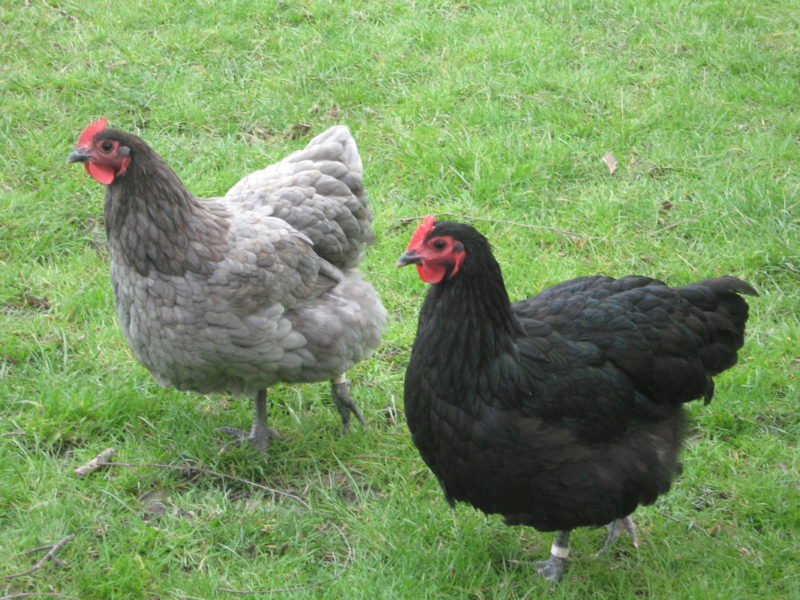
In addition to the Orpingtons used to breed Australorps, White Leghorns, Minorcas and Langshans were used in breeding this bird. The first color variety was a Black Australorp, but there are now several color varieties such as Blue, Splash, and White Australorps.
Australorp Characteristics
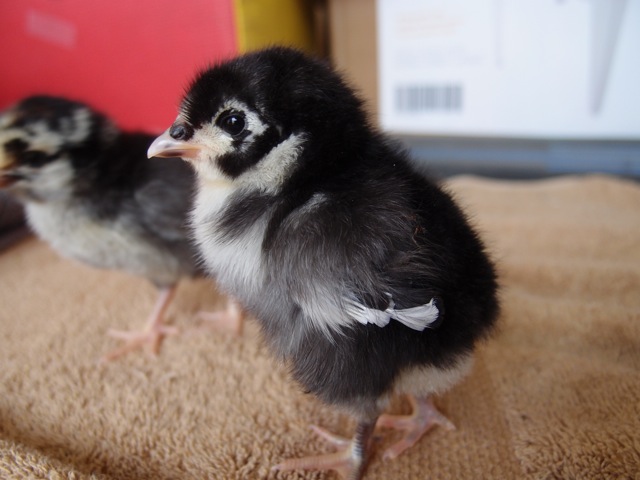
1. Size and Weight
Australorps are of fairly large size and weight, which is what makes them such great dual purpose birds.
Australorp roosters typically weigh between 8 and 9 pounds. Hens are a bit smaller, weighing around 6 to7 pounds.
2. Temperament
Australorps are well known for their sweet and docile dispositions. I’ve owned over 100 roosters in my years of chicken keeping and the sweetest of all of them stand out: Finn, the Black Australorp rooster.
Australorp hens make affectionate and attentive mothers. For any family flock, these are excellent birds to have around your smaller chicken keepers.
3. Egg Production

These hens certainly don’t disappoint in the egg-laying department! One Australorp hen holds the world record for most eggs laid in a year, laying a total of 364 eggs in a 365 day period.
Under normal conditions in your backyard, a hen can lay around 250 large brown eggs in a year.
4. Meat Production
While they might not be the best meat producers, Australorps can provide a decent amount of meat for a dual purpose breed.
If you have an extra rooster or some spent hens, they will be worth your time to butcher and throw in the freezer.
Taking Care of Australorps
1. Feeding and Nutrition
When your Australorps are chicks, supply them with chick starter/grower until 16-18 weeks of age.
Once your young birds are 16-18 weeks old, you can transition them to a good laying feed.
When your hens are laying, supply them with supplemental calcium in a separate dish so they can eat it as they need some.
2. Housing and Fencing
Australorps do well free ranging if you have room for it, but you can also keep your flock in a spacious run and they will be satisfied.
Inside the coop, a minimum of 3-4 square feet per bird is advised to make sure everyone has enough space.
In a run, provide at least 10 square feet per bird so your chickens have plenty of room to stretch their legs.
3. Health Issues and Care
Australorps are actually rather robust birds that don’t have any specific susceptibilities to health issues.
Of course, all birds can have health issues, but Australorps are hardy birds if they are well maintained.
Keep an eye out for external parasites and manage these pests by keeping clean coop and deterring wild birds.
4. Breeding
This breed is a good breed to work with, especially for someone with less experience in chicken breeding.
The solid colored feathers are easier to breed because you don’t have to worry about a tricky lacing or spangle as you might with some breeds.
The first chicks I ever hatched were Black Australorps and they provided a great deal of learning and joy for me.
Alternative Breeds
1. Orpingtons
If you’re after a slightly larger bird with some more color varieties available than Australorps, Orpingtons make a good alternative.
Orpingtons are just as friendly as Australorps, but a bit more maternal than Australorps. Available in some laced varieties, Orpingtons can provide a bit more eye candy than an Australorp might.
2. Plymouth Rock
Plymouth Rocks are another dual-purpose breed with very similar egg and meat production qualities to Australorps.
These are generally a bit friendlier than Australorps, with less of a tendency to go broody.
Plymouth Rocks come in partridge, barred and some solid color variations, so you can take your pick.
3. Sussex
Sussex are a fun breed to raise, another one of my favorites and fairly similar to Australorps.
These birds have egg production comparable to Australorps, but carry a bit more meat on their carcasses. Sussex will be very friendly, curious and make incredible mothers.
Fun Facts About Australorps

An experiment in the 1920’s gained Australorps a large amount of recognition. Under normal conditions with no additional light, a flock of six Australorp hens laid 1,857 eggs in one year, with an average of about 309 eggs per hen. This experiment set a world record and Australorps became a highly sought after breed.
Few chicken keepers have been disappointed by the performance of Australorps. From barnyard pets to attentive mothers and flock protectors, Australorps do not disappoint in any department.
Add a few of these fun birds to your next chick order, chances are, you won’t regret it!


