
Are you up for a new miniature adventure? Do you like to observe plants or try to raise plants outside of their typical environment? Well, you could be the perfect candidate for creating and growing your own terrarium.
If you’re unfamiliar with the idea of a terrarium, you’re going to love it.
I’m a homeschooler and continually looking for new ways to bring the curriculum to life for my children.
When I came across this idea, I knew whether you’re an educator looking to bring intrigue to school work, or someone who loves plants and their beauty, everyone would like this idea.
Here’s what you need to know to create your own terrarium:

What is a Terrarium?
A terrarium is a tiny garden created inside a dish. You can make a closed container garden or place it in an open container.
The type of container will depend upon the environment you’re trying to create. You can easily place this small garden on your table and enjoy it as a live decorative item.
However, if you’re a parent or an educator looking to teach your children something from this activity, it’s a great way to show your kids about photosynthesis and the water cycle.
Also, if you’d like to try your hand at growing a tropical plant which generally wouldn’t grow well in your environment, consider growing it in a terrarium. You might have much better luck when you can create a sealed environment.
How to Create Your Terrarium
Creating your own terrarium is simple. It doesn’t require many supplies and can be done in less than an hour, in most cases. Here are the steps and what you need to be on your way to having your own terrarium:
Supplies:
- Container (with or without lid)
- Pebbles
- Activated charcoal
- Moss or screen
- Potting soil
- Tiny garden décor (optional)
1. Pick Your Container
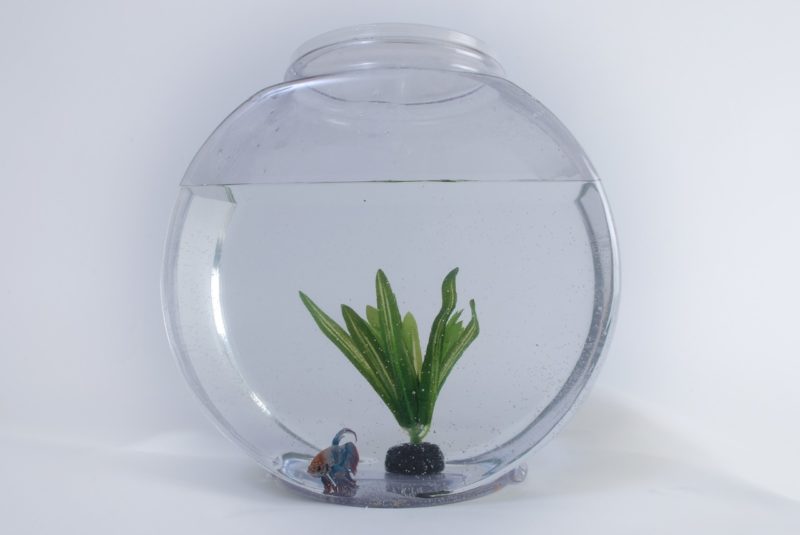
Decide what type of planting environment you want to create before you get started. If you want a dryer climate for growing cactus, you’ll need to find a container with no lid.
If you’d like to produce a tropical climate for ferns, you’ll need a container with a lid to hold the moisture in.
You can use items such as a fish bowl, cookie jar (with or without the lid), a plate with a glass bowl over the top to create a dome, a glass mason jar, or an empty soda bottle cut in half (for either an open or closed terrarium.)
Once you know what type of climate you’d like to create and what kind of container you’re going to use, you’re well on your way to creating your perfect terrarium.
2. Stone Foundation
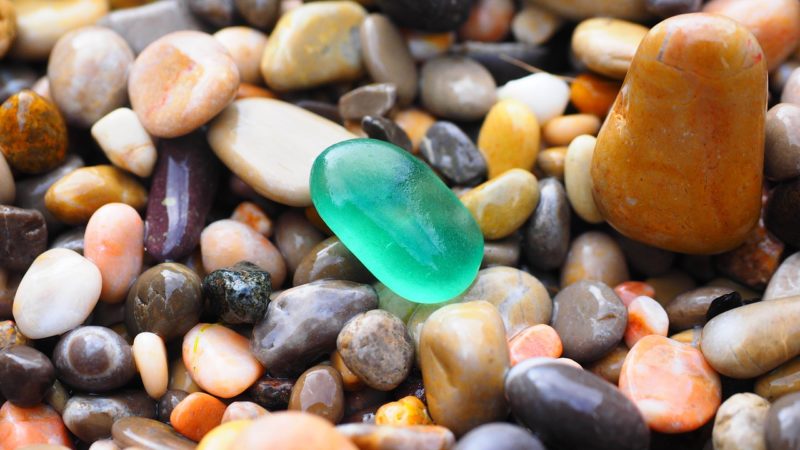
The terrarium is going to be made up of different layers to make the environment function as it should inside the container.
When your container is ready, add a layer of pebbles to the bottom of the container. Once the base is covered, you’re ready to move on to the next layer.
3. Add the Charcoal
Next, you need to add a layer of activated charcoal. Be sure not to overlook this particular layer as it not only filters the water in the terrarium but also stops fungi from being produced within the terrarium.
When you have this layer covered, you’re ready to move forward with adding the next layer.
4. Place Some Separation
A separation layer is another crucial layer to add to your terrarium. Either add a layer of moss or cut a section of a screen to fit inside the terrarium.
Either way, this layer is going to stop the soil from sinking down into your pebbles. You need each layer to hold in place to be able to do its job correctly.
When you have this layer in place, you can add the next layer.
5. Add Your Soil
Now, you’re ready to add the soil. Choose a quality potting soil and place a layer which is anywhere from two to three inches thick.
It should be deep enough to plant pint-sized plants within it. When your soil is in place, you’re ready to add your vegetation.
6. Place Your Pretty Plants
The beauty of a terrarium comes partially from the plants. You should have decided which plants you want to grow in your terrarium when choosing the environment for your container set-up.
When you have your plants, begin by making tiny holes in the soil. You may have to divide your plants up into small segments containing only one root since most terrariums are rather small.
You can use a pair of tweezers to help set the plants in the soil for simplicity. When each plant is in place and has soil around the roots, you’re ready to move along to complete your terrarium.
7. Decorate It
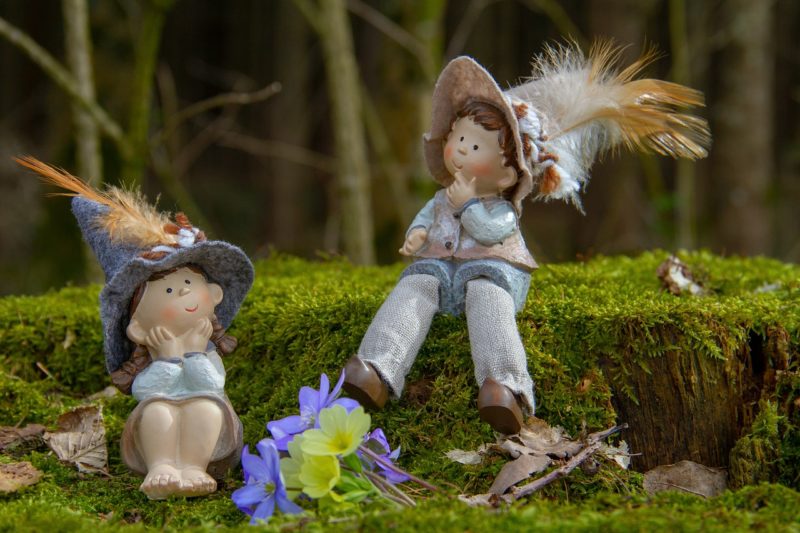
This step is optional but is a fun suggestion. Adding small decorative items to your terrarium compliments the beauty of it.
Not to mention, if you’re doing this as a fun activity with children, they’d enjoy the terrarium being decorated.
You can find fun items such as fairy houses, garden gnomes, and much more to fit inside your terrarium to give it a fun and unique look.
8. Let it Rain
Next, you need to add some water to your terrarium. Use a squirt bottle to mist the terrarium about 10 times gently.
Be sure to spray the soil and the sides of the terrarium. It will ensure there’s enough water in it to allow the water cycle to begin and sustain itself for an extended period.
9. Seal Jar
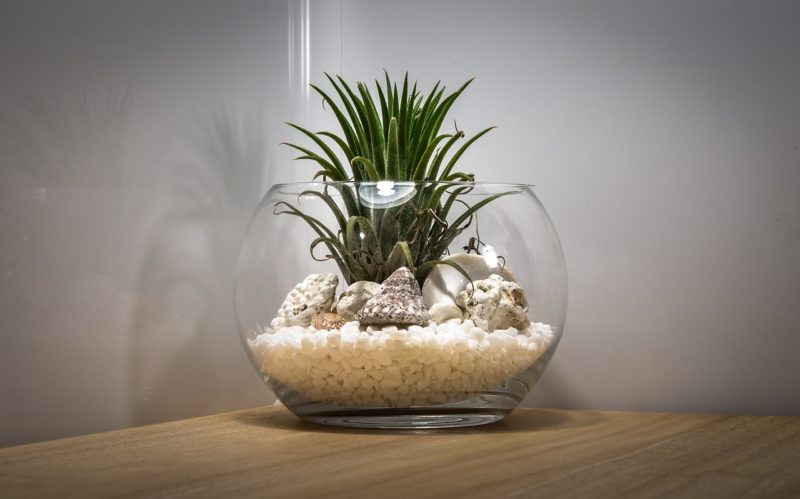
Finally, if you’ve chosen to have a moist environment for your terrarium, you’ll need to seal the jar tightly. This will hold any moisture in place within your terrarium.
How to Care for Your Terrarium
As previously mentioned, terrariums need little care to thrive. If you give them a couple of key ingredients, you should have a beautiful terrarium. Here’s what they need:
1. Indirect Sunlight
Place your terrarium in a window where it will get plenty of indirect sunlight. If you place your terrarium in direct sunlight, it will get too hot.
In turn, your plants will scorch, and your terrarium won’t function as you had hoped. If you have a window which gets ample amount of sunlight, this would be a great location.
2. H2O
Keep an eye on your terrarium regularly. It’s normal to see the water cycle taking place within it. You should see mist forming, fog, or condensation forming on the side of your terrarium container.
When your terrarium becomes hot, it will pull moisture from the soil and rocks you’ve placed inside of it.
However, if your terrarium gets too clouded where you can’t see inside of it, take the lid off the jar to allow some of the moisture to evaporate.
This is a sign there’s too much moisture inside the container, and it needs help to remove it. When you’ve let the terrarium dry for a while, place the lid back on it, and try again.
3. Proper Watering Techniques
Eventually, you’ll see less and less moisture inside your terrarium. This can take weeks or months, depending on the container you chose and how hot the terrarium gets.
When it’s time to water the terrarium, it’s best to add another ten sprays to the terrarium. If you choose to water the terrarium directly, be sure you don’t go above the screen or moss layer.
If you leave water standing on the soil, it will become oversaturated and harm your terrarium. This is why misting is usually the best bet.
4. A Haircut Every Now and Again
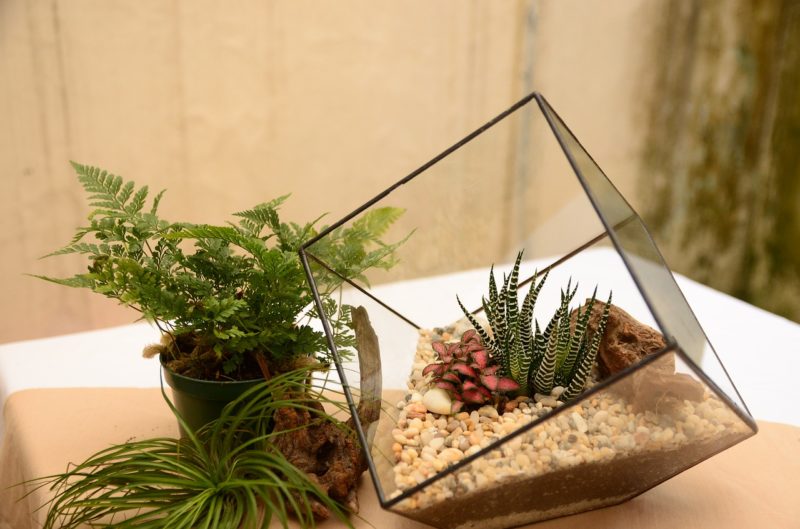
You will need to prune the plants within your terrarium from time to time. It’s natural for plants to grow, but if you don’t keep them trimmed back, they’ll quickly outgrow the space in your container.
For this reason, you should use a pair of scissors to snip each plant back down to the desired size. When they grow again, repeat this process.
5. Skip the Fertilizer
There’s no reason to fertilize your terrarium. Fertilizer encourages plants to become larger and larger. You don’t want this in a terrarium because the plants will outgrow their space.
6. Plant Wisely
When designing your terrarium, be mindful of the environment each plant included will need. It’s best to choose plants with similar needs.
For instance, you don’t want to mix ferns with a cactus. A cactus requires a dry environment, while a fern desires more moisture.
If you try to satisfy one plant, you will be harming the other. This is why it’s best to only place plants with similar environmental needs together in one terrarium.
However, if you like the idea of growing both varieties of plants, you could make a closed terrarium and an open terrarium.
Creative Terrarium Ideas
Now you know how to create a terrarium and how to care for one properly. I wanted to provide a few ideas from around the internet to inspire your terrarium creation:
1. Simple Cactus Garden
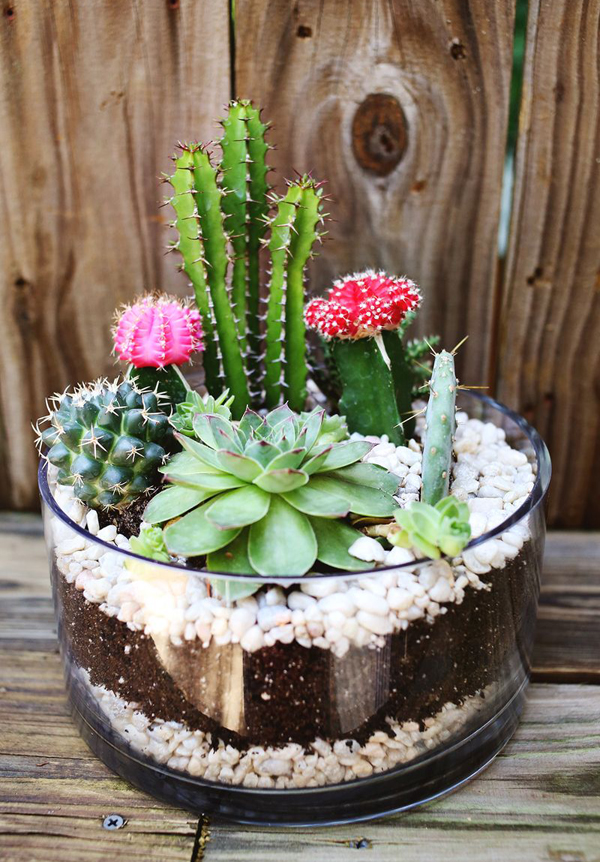
This is a simple terrarium created inside a glass bowl. It’s an open terrarium since the cacti will require a dryer environment.
However, it’s a gorgeous arrangement because you see each layer of the terrarium. The plants add a simple but gorgeous look as well.
2. Lego Terrarium

If you have kids, they’ll love this terrarium idea. Again, this is an open terrarium idea, but it’s a fun one because of the Lego figurines inside of it.
Plus, it would be a fun way to teach your children about photosynthesis, caring for plants, and should keep their attention too.
3. Salt Shaker Terrarium

Are you looking for a subtle décor item for your kitchen table? This could be it in a small package. The next time someone says, “Pass the salt, please,” they’ll be in for a big surprise.
This terrarium is created inside a salt shaker. It’s an excellent design idea for a closed (moist environment) terrarium.
4. The Magical Forest

Do you have kids who love fairy tales? They need this terrarium in their life. You could make it together and place it in their room or favorite location in the house.
From there, they could let their minds run wild with imagination as they pretend to be a fun character in this magical forest.
Well, you now know what a terrarium is, what its purposes can be, how to create one, how to care for one and have some fun ideas to inspire your terrarium project.
This is a fun and inexpensive way to decorate your home, get creative, and teach the children in your life a few fun things about science too.


