
Have you ever considered raising your own guinea fowl? Maybe you think their ‘chi-chi-chi’ is so annoying you don’t think you could take it.
Or maybe you just aren’t really sure why you would even consider raising them?
Well, that is what I’d like to share with you. Guineas are some very amazing animals. I shared with you the few things I learned when I first started raising guineas.
But now, I’ve learned so much about how to raise them, and why they are so amazing that I think everyone should be in the ‘know.’
Here is what you need to know about guinea fowl:

How to Raise Guinea Fowl

1. Incubation
When you first decide to raise guineas, I would recommend either purchasing them as keets (baby guinea fowl) or incubating eggs yourself. You can buy fertilized eggs on sites like Facebook and Craig’s List.
If you do decide to incubate them be aware that there are some differences in incubating baby guineas verses incubating chickens.
So keep in mind that guinea eggs need to be kept at a constant temperature of 65-68 degrees Fahrenheit, and the incubation period is usually around 28 days.
But once they hatch, you’ll treat them as you would any newly hatched bird. You leave them in the incubator for around 6-8 hours until they have completely dried.
Then they are ready to be moved to a brooder box under a heat lamp.
2. Raise Them as You Would Feathered Fowls
Now, once your keets have graduated to the brooder box, you can raise them along with newly hatched chicks or ducklings. The major difference is that keets should be fed differently.
Instead of using regular chick starter feed, they should be fed the starter feed for game birds. It has the different nutrients that their bodies require.
Then you’ll leave them in the brooder box until they no longer need the heat lamp and have outgrown it. This usually takes around 4 weeks or so, in my experience.
But it could take longer. It all depends upon your birds. Just be sure not to rush them. It is better to leave them under the heat lamp until their full feathers have come in so they have a better chance of survival.
3. Train Them
When your guinea fowl have graduated from the brooder box, you’ll need to place them in a tractor if you are going to let them free range.
If not, then you’ll need to move them to another area (like an enclosure or kennel) where your coop birds can get adjusted to them before introducing them to the coop.
If they are going to be cooped, then be sure to clip their wings because guinea fowl are flighty birds. They can roost in trees if they so desire.
So you’ll want to clip their wings and consider using bird netting over any open areas. If they have a completely closed coop and run, then they should be good to go.
But if you are planning to free range your guinea fowl, you’ll need to train them.
First, you must figure out which guineas are boys and which are girls. This is difficult as you have to go off of their sounds. The girls make a sound that sounds as though they are saying, “Come back!”
But the boys make a ‘chi, chi, chi’ sound. When you have this figured out, you’ll need to keep your guineas safe inside their tractor for about 2-4 weeks. They need to be familiar with it. Be sure to feed them plenty of fresh food and water. Follow the instructions on the bag of starter feed to know when to introduce them to other food choices such as layer feed and corn.
Next, you’ll begin by releasing a female bird every day or so. She will hang around the tractor because she will not leave her male companion.
Finally, you’ll release the males. They will explore the areas around them but should return to the tractor or coop. Basically, wherever they decide to take up roost.
But don’t be alarmed if they decide to roost in the trees.
However, if you leave food and water available to them in the coop or tractor, then they will most likely associate that with home.
4. Let Them Do Their Job
After your guinea fowl have been released you have to let them do their job. Guineas are not like chickens. They actually will rule your chicken coop.
But they will not stay in their property lines. They will figure out where the bugs are and create a path that they will make rounds on every day. Guineas do not know property lines and do not care what a street is.
So when you free range them, understand that they will be in your neighbors’ yards most likely, and they will think that they own the roads. Just be advised. They have a mind of their own.
And don’t be alarmed if they fly on top of your house, and you wake to the sounds of their feet running across your roof in the mornings. They go where they want to.
But they have lots of nice features about them so the noises they make, the places they fly, and the yards they visit will probably not bother you very much.
Reasons to Raise Guinea Fowl
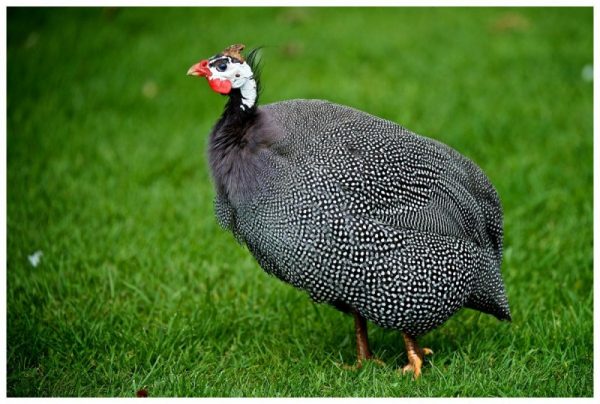
1. They Are Great Bug Zappers
If you have bugs, then you need to consider raising guineas. They will chase bugs all over your yard. They eat ticks, June bugs, and almost anything else that flies around your property (and neighbors’ property.)
So if you’d like to rid your property of unwanted pests and bugs, then you need to add guineas to your flock and let them make a meal out of your pests.
2. They Kill Snakes
When we first moved to our home, we would occasionally come across snakes. Our next door neighbors had a bad problem with snakes.
So when my husband decided to add guineas to our land I was only on board because I didn’t want snakes.
Well, I kid you not, in the three years we’ve had them I don’t think I’ve seen a snake since. My neighbors don’t have snakes anymore either.
So they are definitely earning their keep around our home.
3. They Will Control Pests in Your Garden
The reason my husband decided to get guineas was because our garden was being ravaged by June bugs every year.
So instead of using a ton of chemicals on our plants, we added guineas. They have certainly done their job. They will walk through our garden (without scratching it to pieces) and gently pluck the bugs off of our plants.
They have saved me a lot of work with battling bugs, and I’m able to garden more organically because of them.
4. They Are Watch Dogs
No one comes near my home that I don’t know about because of my guineas. When I hear them get riled up I know that someone or something is near my home.
So I start looking around and am able to meet anyone long before they ever make it to my door.
And actually, some people are very afraid of guineas. I’ve never had any of mine be aggressive (unless they had recently hatched keets. Then the mom just wanted us to keep our distance.)
But we had a man deliver a load of rock to our house. He wouldn’t get out of his big dump truck until I assured him I didn’t have ‘attack guineas.’
So since guinea fowl look kind of odd and can fly, they will actually deter some people.
But when you live as far down in the sticks as I do, I appreciate the fact that guineas warn me when I have visitors because if you are in my area, you are either lost or up to no good.
5. They Will Help Your Chickens
Guineas have a very keen sense when a predator is around. When we have a hawk anywhere in our area, myself and my chickens will know about it long before we see it because our guineas will go nuts.
But keep in mind, guineas will be rough on your chickens. They like to rule things.
So they will flog your chickens and peck them to keep them in line. It is kind of a fair trade off considering they are also their predator alert system. (At least that’s the way I look at it.)
6. They Require Very Little
Guineas don’t require a lot of fuss. You don’t really have to feed them (except during the winter months when bugs aren’t as plentiful.)
However, I keep food and water available to them in our chicken coop year round just so they remember that our house is home.
But guineas don’t need a coop as they can roost in the trees. Our guineas moved right into our chicken coop.
So basically, wherever they want to sleep, they will. During the summer months, our guineas will sleep outside on our fence.
But that is it. They don’t need a fancy coop, they will provide most of their own food for part of the year, and they may need you to keep water out just so they don’t wander too far in search of it. If they do that, they may not come home.
So keep in mind that you want to make your home a welcoming place for them.
The Downside to Guinea Fowl

So I’ve shared with you why you might want to raise guineas. It is only fair to let you in on their cons as well.
1. They are noisy
Guinea fowl are noisy. There is no way around it. They will call to each other during the day while they hunt food together. They will make lots of noise when you have a predator or a guest.
But sometimes, the rooster will just find a perch and decide to do his ‘chi,chi,chi’ call to let the world know that he is the man. Period.
So just keep this in mind if you live around a lot of people.
2. They know no boundaries
Secondly, guinea fowl do not know boundaries. I had a guinea try to take over my neighbor’s chicken coop once. I was mortified when the neighbor met me at the fence with my bird in hand.
But my neighbors have grown to love our guineas since they have kept predators, bugs, and snakes away from their property too.
However, it is embarrassing when I’m outside in the morning and my guineas are doing their sounds all up and down the road waking up everyone as they stroll along eating.
Thankfully, I do not live near the main road or I’m sure I would’ve lost a few of our birds by now. I will catch the rooster trying to pick a fight with his reflection in our truck some mornings.
So they don’t think much about moving out of the way for vehicles.
But that is all of the negatives I have found in owning guinea fowl over these past few years.
Personally, I love mine. I think they are beautiful birds. They are funny to watch. I also like how they perch on my front porch each morning to sing me their ‘chi, chi, chi’ song. It just adds to the charm of country living.
So now you know how to raise your own guinea fowl. I hope I’ve given you some insight so you know a little more about what you might be getting into if you decide to raise guinea fowl.
But I’d love to hear your thoughts. Do you raise guinea fowl? If so, what’s your favorite and least favorite thing about them? Do you have any tips for those that may be considering raising them?
We love hearing from you so please leave us your comments in the space provided below.


