
If you like to garden, you know how important it is to fertilize your plants so that they can grow healthy and strong. But, do you really know what nutrients are missing from your soil that your plants might need?
Having a soil tester on hand will help you not only know what is in your soil, but also what you need to add to it to give it the right pH levels. Here are a few tips and reviews to help you find the best soil test kit for you.
The 6 Best Soil Test Kits
- Environmental Concepts 1662 Professional Soil Test Kit
- Luster Leaf 1605 Rapitest Digital Soil Test Kit
- Environmental Concepts MA10 Moisture Analyzer
- KKmall® 3-in-1 Soil Moisture Sensor Meter, PH acidity Tester and Light Meter (Our Top Pick)
- Dr. Meter Soil Moisture Sensor Meter
Our Top Pick for the Best Soil Test Kit
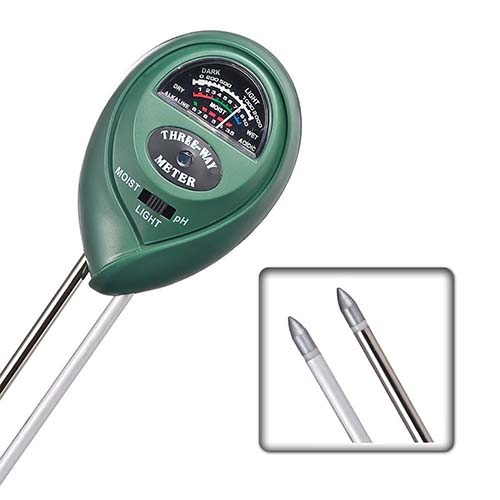
KKmall® 3-in-1 Soil Moisture Sensor Meter, PH acidity Tester and Light Meter
For a digital test, you’d normally have to buy one kit for each test. But not with KKMall 3-in-1. This kit allows you to test moisture, pH, and light at once. If you’re like most gardeners, these are often enough. Above all, the test is quite accurate for its price.
Check the price on AmazonWhy do we need to test soil?
Before you add fertilizer to your soil, it is important to know what your TDS and pH levels are. Once you know what your soil lacks, you will also know what you need to add to it to make it as healthy as possible. A high-quality soil tester will be able to provide you with the specific qualities of your soil so that you can pick the best fertilizer for your plants.
A high-quality test kit will also be able to tell you what plants will grow the best in the soil that you have. Depending on your climate, your soil and location may best geared for very specific plants. A test kit will help you figure the best plants for your area so that you don’t use the wrong plants and have massive crop failure.
Another thing a soil test kit will help you avoid is over-fertilization. By over-fertilizing your plants, you will make your crops grow too fast which leaves them open to diseases. A soil test kit will help you avoid several issues so it is important to test regularly and for the correct things.
What do soil testers test for?
When you are testing your soil, you will need to know what things that you need to keep an eye on. The most common thing to test for is soil pH. By knowing your soil pH, you can then get the optimum amount of nutrients for your plants.
Your pH levels should measure between one and fourteen with a neutral pH coming in at seven. If the level is under seven, then you have soil that is acidic. Everything above seven will be alkaline soil. Soil that is too acidic will keep the chemicals in the fertilizer from getting to the plants.
You will also want to test your soil’s conductivity which can be measured in two different ways. The TDS is the total dissolved solids and it measures what amount of fertilizer you have in your soil already. Electrical conductivity measures will measure the amount of the nutrients in your soil. Knowing these levels will help you know what is in your soil and then you can decide on the amount of fertilizer you will need.
Measuring the soil temperature will let you know what to grow and how. Different crops need different temperatures to be able to germinate and it is vital that you test the soil temperature first. Make sure to measure it at the plant depth and not just at the surface. Your seed packaging will help you find out what the best temperature is for each specific plant.
What to look for in a soil tester?
1. pH Readings
One feature that is a must-have in a soil tester is a pH reading. The most common thing to test your soil for is pH. By knowing your soil pH, you can then get the optimum amount of nutrients for your plants.
Your pH levels should measure between one and fourteen with a neutral pH coming in at seven. If the level is under seven, then you have soil that is acidic. Everything above seven will be alkaline soil. Soil that is too acidic will keep the chemicals in the fertilizer from getting to the plants.
2. Conductivity Readings
You also want to make sure your tester can test your soil’s conductivity which can be measured in two different ways. The TDS is the total dissolved solids and it should measure what amount of fertilizer you have in your soil already. Electrical conductivity measures will measure the amount of the nutrients in your soil. Knowing these levels will help you know what is in your soil and then you can decide on the amount of fertilizer you will need.
3. Temperature Readings
A simple temperature reading is also a great feature to have in your tester. Measuring the soil temperature will let you know what to grow and how. Different crops need different temperatures to be able to germinate and it is vital that you test the soil temperature first. Make sure to measure it at the plant depth and not just at the surface. Your seed packaging will help you find out what the best temperature is for each specific plant.
Are there different types of soil testers?
There are several different types of soil testers out there and they will give different combinations of measurements. When you just want to test the pH, you should not have a hard time finding an affordable meter. You can also get meters that will measure moistures levels as well as light. When you are measuring conductivity and pH, you will find lots of options that will combine these results. You can also find testers that will measure EC and TDS.
A high quality kit will give you the right amount of equipment to perform several tasks with just the one device. It should be a durable kit that comes with instructions on how to perform all the tests. If you can’t find a tester that measures what you want, you can contact a professional to see what kits will work for you needs.
How do you care for soil testers?
To make sure you get consistent and accurate measurements from your soil tester, make sure to properly maintain it so it will always work correctly. It is important to always use the right calibration solution with your test and make sure that it is clean and stored correctly at all times.
Best Soil Test Kit – Product Reviews
1. Environmental Concepts 1662 Professional Soil Test Kit
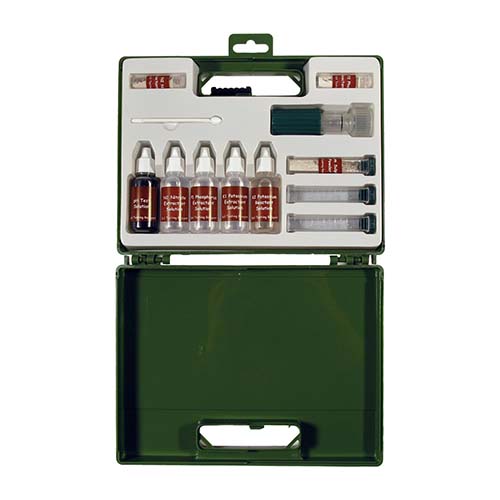
The Environmental Concepts 1662 Professional Soil Test Kit is a top-rated kit that comes in a durable carrying case so it is easy to transport around your yard while you test your garden. The Environmental Concepts comes with a comprehensive instruction booklet that helps you determine what is the best way to use your kit and find out how to get the best use out of your soil.
The Environmental Concepts Soil Test kit can give you accurate and fast results with readings that you need to get the most out of your soil to nurture the plants that you want. The kit is also great for a professional or in a classroom. It is also an affordable and effective solution to your gardening needs.
This is definitely a kit that customers love due to its ease of use and its high accuracy levels. When you purchase an Environmental Concepts Soil Test kit, you know you are buying a long-lasting product that will be accurate every time. Due to its consistency and durable construction, the Environmental Concepts Soil Test kit is a popular product for consumers.
Pros
- Tests are easy to conduct
- Easy to use and provide quick results
- Comes with an instructional booklet
- Fun to use with kids too
Cons
- Plastic filtration device splits at the seam
- Plunger system is hard to use
- Chemical test, may not ideal for gardeners
2. Luster Leaf 1605 Rapitest Digital Soil Test Kit
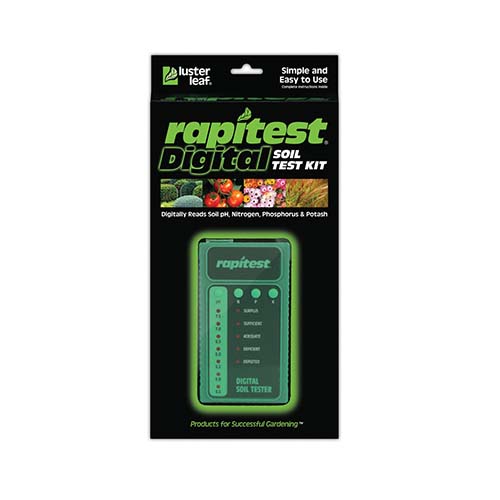
The Luster Leaf 1605 Rapitest Digital Soil Testing Kit is another popular option in the industry. It features advanced LED digital technology that uses colors as a part of the test readings. It is simple to use. All you need to do is push a test button and you will receive your results in seconds. The kit features over 450 plants to choose from with pH preferences for them all so you will know when and how to adjust the pH in your soil for each plant.
The Luster Leaf Soil kit also includes a booklet with guidelines for fertilizing based on your phosphorus, nitrogen and potash results. There are 25 different tests with ten that are specifically for pH and five other just for phosphorus, nitrogen, and potash. This is a versatile soil test kits that give you accurate and fast ratings when you need them making it one of the top-rated soil test kits on the market.
The Luster Leaf Soil kit also provides you with extra tools that help you take care of your soil for years to come so you will always know stages to take to make sure you are getting the most out of your soil. The Luster Leaf makes working with soil a much easier tasks with simple and easy to read results.
Pros
- Easy to understand directions
- Kit is easy to use and not messy
Cons
- Tester may not work at all for the pH
- Tester either displays the highest or lowest value each time
- Can be inaccurate
3. Environmental Concepts MA10 Moisture Analyzer

The Environmental Concepts MA10 Moisture Analyzer Meter has a dual probe system that helps you get accurate readings every time. It automatically measures the moisture in your soil so you will always know what you are working with. The red, green and blue display show readings from 1 to 10 (dry to wet) and they are very bright and easy to see.
The EC meter does not use batteries and it is very simple to use. It even comes with information on how to measure and analyze moisture correctly for over 150 plants.
Gardeners and agriculturalists will benefit from using this moisture analyzer and your plants and flowers, fruits and veggies, trees and shrubs, grass and lawn will produce a bountiful harvest and be fresh and flourishing.
Pros
- Great price and doesn’t require batteries
- Much easier to use than its competitors
- Shows accurate results
Cons
- May not be sensitive enough for some soil conditions
- Seems to break easily
4. KKmall® 3-in-1 Soil Moisture Sensor Meter, PH acidity Tester and Light Meter
The KKmall® 3-in-1 Soil Moisture Sensor Meter PH Acidity Tester and Light Meter is a three in one product. It measures your soil’s moisture, it’s pH level and the light level in one small tester. It is easy to use. All you have to do is plug it in, push the meter into the soil and find the reading. No batteries are needed.
The KKmall pH Acidity Tester and Light Meter is compact and can be used indoor and out. The KKmall is perfect for letting you know when you need to add water, adjust your pH or change the light for your plants. It is scientifically accurate and promotes healthy plants.
Pros
- Tests pH, moisture and light
- Easy to use and no batteries required
- More accurate than other digital test kits
Cons
- Breaks easily
- Test results might be inaccurate compared to chemical tests
5. Dr. Meter Soil Moisture Sensor Meter

The Dr. Meter Moisture Sensor Meter has a single probe and a red, green, and blue color-coded test range between one and ten that tells you whether the soil is dry, moist or wet. It has an easy to read moisture level indicator that will help promote your plants’ healthy growth. The meter does not require batteries or electricity, it just plugs into the soil and you can read the scale.
This meter is very compact with a portable design so it can be used inside and outside. Whether you are a beginner gardener or a professional, the meter makes it quick and easy to keep up to date with your plants.
Pros
- Very good tool for checking water levels
- Do not need batteries to operate it
- Readings are easy to see and read
Cons
- Only one probe
- Doesn’t give you accurate readings in all soil types
- Tip of the meter breaks off easily
Our Top Pick for the Best Soil Test Kit
After reviewing some of the best products on the market, the result is quite disappointing. Chemical test is too much of a hassle, while digital test gives limited and inaccurate result. This is the reason why most people don’t bother testing their soil.
However, if you find your soil is not ideal for gardening and you have to conduct a test, this is the best of the bunch:
KKmall® 3-in-1 Soil Moisture Sensor Meter, PH acidity Tester and Light Meter
For a digital test, you’d normally have to buy one kit for every test. But not with KKMall 3-in-1. This kit allows you to test moisture, pH, and light at once. If you’re like most gardeners, these are often enough. Above all, the test is quite accurate.
Check the price on Amazon


