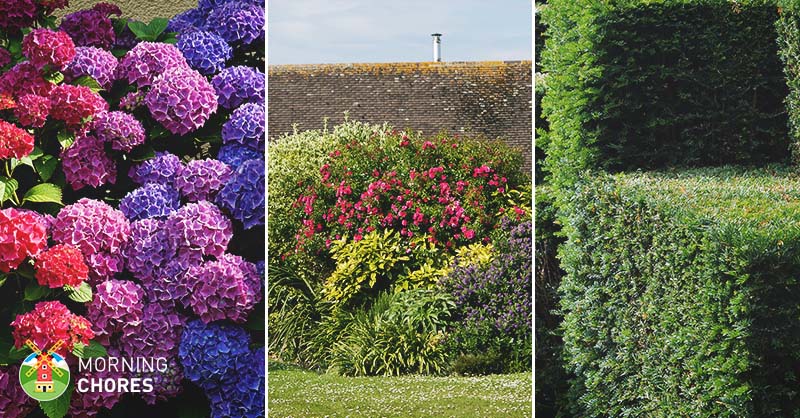
Are you unsure when or how to trim your bushes?
I used to be afraid of trimming my bushes too. Then one year, I decided I was going to tackle this hurdle and haven’t looked back since.
Actually, I’ve found it very empowering to be able to take care of my own landscaping. The more you know, the better off you are in my opinion.
So I want to share with you the tips I’ve learned along the way of this landscaping journey. Hopefully, it will help you grow more confident in your own trimming experiences.

How and When to Trim Your Bushes:
1. Pick the Right Time of Year
There is a dispute amongst gardeners as to when is the best time of year to prune your shrubbery. Some say that fall is the way to go while others say spring.
In my own experience, I prune in the spring. My reasoning is that it is easier for me to see what is going on with my plants.
When the shrubs are on their way to dormancy, I have a tendency to get a little too happy with my hedge trimmers.
But when they are in bloom, I have an easier time of seeing what needs to stay and what should go.
So this is my preference. If you have a different preference, then stick with it. By all means, do what works best for you.
2. Take a Look at What is Going On
After you’ve picked the time of year you want to trim your shrubs, you need to begin by taking a look at the whole picture. Don’t just walk up to your bushes and start chopping away.
Instead, look at each shrub and see if there are any shoots that are out of place. Are there any dead places on the shrub?
If you answer yes to either of those questions, then you know where to begin.
3. Get the Right Tools
The next step is to be sure that you have the right tools for the job. I use both hedge clippers and pruning shears.
Truthfully, it depends upon what I’m pruning. If I’m pruning my rose bushes, I try to do the job with the hedge clippers so I don’t have to get as close to the thorns.
And if you are uncertain about which hedge clippers to use, use our shopping guide.
But if I’m trimming ‘friendlier’ plants or shrubs, then I use my pruning shears since they are obviously smaller and easier to handle, in my opinion. Need help picking out pruning shears? Use our guide.
Also, don’t forget your gardening gloves. This will protect your hands from being pricked or scratched during the process. Your hands will be glad you did, and you can also read our gardening glove guide, with special reference to great gloves to use when pruning rosebushes.
Now that you have the appropriate tools, you are ready for the job at hand.
4. Trim for the Appropriate Type of Bush
Pruning your shrubs is a super easy job. Believe me, if I can do it, I would say almost anyone can.
However, there are two different types of shrubs that require two different approaches to pruning. If you have evergreen shrubs, then you’ll basically just want to look for any shoots that are causing the bush to look misshapen.
So if you see any of those, then you know to cut those back until they fit in with the rest of the bush.
But what do you do if you have a bush that is evergreen and looks as though it is taking over your home?
Well, in that case, you’ll need to decide how far back you want to take the bush. I recommend cutting a little at a time because you can always take more off, but you can’t add back.
So begin by making little cuts to the plant until you get it back as far as you’d prefer and so all of the bush is even. Just be aware not to cut the main stem of the bush, or you could kill your shrub.
Now, if you are trimming a flowering bush, you’ll need to first look for any dead on the shrub. If you find dead flowers, cut the shoot back until the dead is removed.
If you find an entire section that is dead, then cut it back. Just be advised not to cut the main part of the shrub.
Then, once the dead is removed, you are ready to look for any misshapen parts of the shrub. Once you have the shrub cut to where it is even, you should be good to go.
5. Make it Look Good
Now, once you cut your shrubs, you’ll want to step back and look at the picture as a whole again. Do you have one shrub that is awkwardly bigger than the shrub next to it?
If so, then you may want to go back and do a little more trimming until they all look uniform.
Basically, the whole point of pruning is to cut off any dead parts of a bush and help them to get back into shape. It is very similar to us getting a hair cut.
Once all of your shrubs are looking good, it is time to wash up and give yourself a pat on the back because you’ve done a great job.
6. Enjoy Your Landscaping
Finally, you need to sit back and enjoy your work. I always feel better when my shrubs are looking well maintained. It has a way of adding a more welcoming touch to your home.
So now that you’ve pruned your shrubs, you are ready to move on to other tasks for the year. Just remember to trim off the dead as needed on your flowering shrubs.
But the other shrubs shouldn’t need any more attention until the following year when they hit another growth spurt. At least mine don’t anyway.
Now that you know how to properly care for your bushes, I’d like to give you a few popular options for shrubs in your yard.
Some of these are easier to care for and all add a splash of life to your landscaping.
Beautiful Shrub Choices
1. Knock Out Rose Bushes

These are my favorite. At our previous home, we had these all across the front of the house. They created big pretty pink roses.
Plus, it definitely added a lot of color to our home.
But what I loved the most is, aside from the thorns, they were very easy to care for. I trimmed up the dead and any misshapen shoots on the shrubs each year, and they remained gorgeous.
So if you are new to growing bushes, then you might definitely want to consider growing these beauties.
2. Hydrangeas

A lot of people are turned off from hydrangea bushes because they are gorgeous when they are in bloom, but look rather simple when they aren’t.
Well, they now have a hydrangea bush that blooms for 6 months out of the year. The flowers are large and gorgeous.
Plus, it is another bush that is pretty easily cared for. You just trim up the dead blooms when they are done blooming.
Then when the bush begins getting too large or misshapen, you carefully trim it back a little at a time until you reach your desired look again.
3. Purple Smoke Bushes

These bushes look rather simple but also add a lot of color to your landscaping. I like color so naturally, these bushes made my list.
They produce dark purple leaves, and you should only have to cut back any misshapen pieces of the bush to keep your landscaping looking clean.
Then you just sit back and enjoy the shrubbery. Since it doesn’t bloom, you shouldn’t have any dead blooms to worry about trimming back.
4. Burning Bush
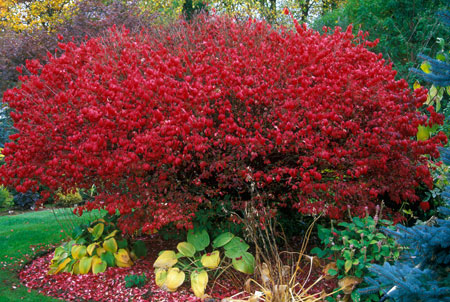
This is another bush we planted at our previous home. It was very easy to care for. It grew wonderfully. Also, it added some gorgeous color to the front of our home as well.
So this bush doesn’t flower which means I wasn’t having to worry about cutting off dead blooms.
Instead, you just cut back any areas that may become misshapen. Then enjoy the bright red color during the warmer seasons of the year.
5. Wintergreen Boxwood

This bush is one that many people choose because it adds some life to the front of your home, but doesn’t require a ton of maintenance.
Plus, this bush is said to respond well to pruning.
So if you’d like to add some life to your property without adding a ton of color or blooms, then this could be a great fit for your landscaping needs.
6. Wax Myrtle

My great grandmother had these bushes at her home. My parents still have them at their house. They grow to be large and will need to be pruned because they can get misshapen.
But other than a little trimming, they are pretty low maintenance. They also provide simple curb appeal and some life to your home too.
So if you need something simple to go into your landscaping, then this could be it.
7. Butterfly Bushes

I love butterfly bushes. They remind me of my late mother-in-law. She could take trimmings of these bushes, and make them grow as it was nothing.
And they grow to be gorgeous plants. They also attract lots of beautiful butterflies to your home which is always a nice addition.
So if you’d like a gorgeous bush for live décor in your yard, then you may want to consider adding these to your landscape.
8. Azaleas

We have azaleas at our current home and grew them at our previous home as well. They are gorgeous and simple bushes to grow.
Also, they add lots of colors where ever you plant them. They come in different color varieties so you can decide which colors work best for the theme of your home.
However, if you have goats be sure not to grow azaleas where they can access them. They are poisonous to them and could harm them.
Well, now you know how to trim your shrubs and have a few shrubbery recommendations to help you plan and care for your landscaping.
Hopefully, they’ll add lots of natural beauty to your home.
But I’d love to know how you go about trimming and caring for your shrubs? Which shrubs are your favorite? Do you have any recommendations for those that are looking to amp up their landscaping?
We love hearing from you so leave us your thoughts in the comment section below.


